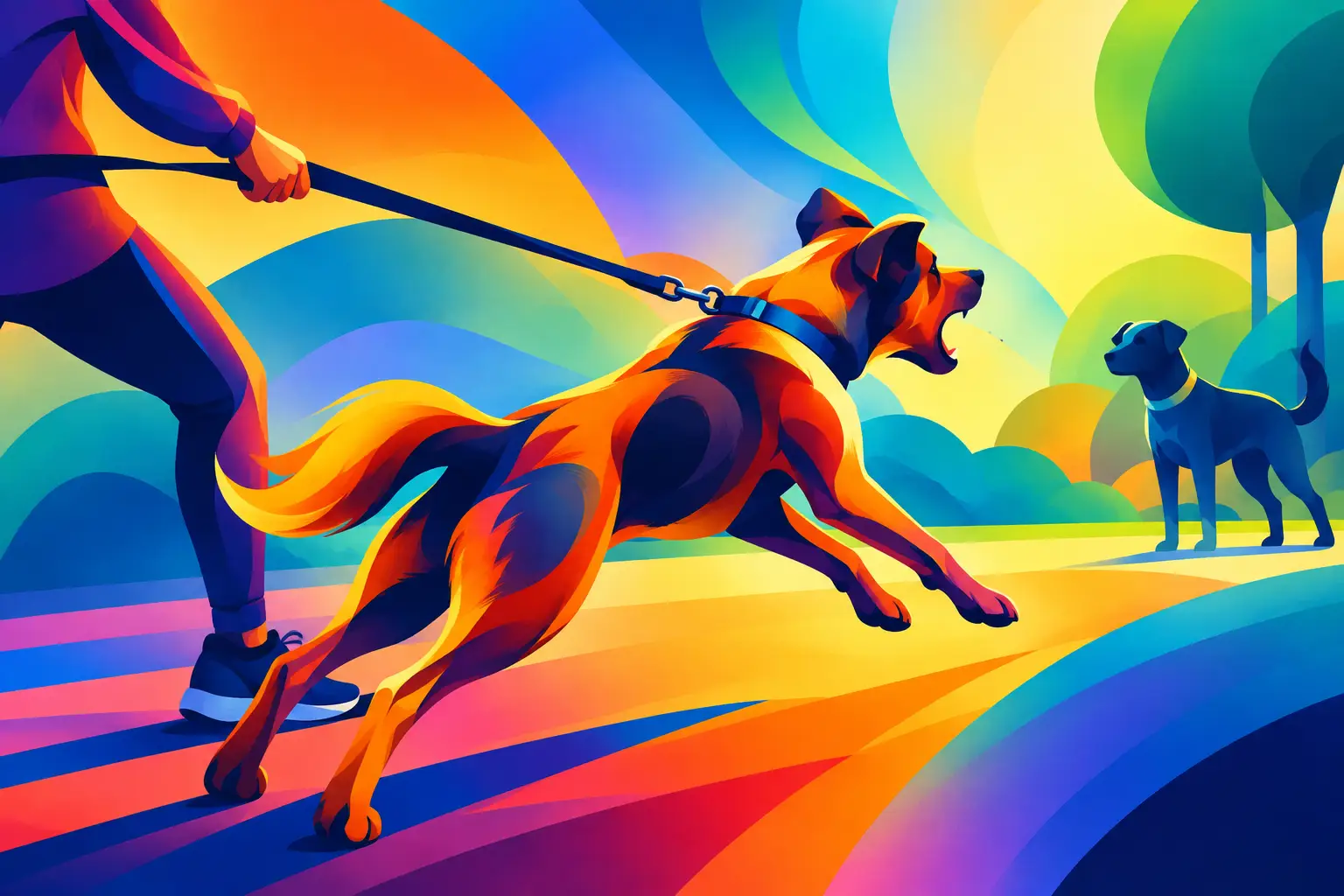
A dog that suddenly launches towards another dog, cyclist or passer-by can make even a short walk feel stressful. Understanding why dogs lunge is the first step towards changing the behaviour safely. Lunging is not a character flaw, nor does it automatically mean your dog is aggressive. It is a behaviour with a cause, and that cause needs to be addressed with calm handling, practical management and consistent training.
For many Melbourne owners, the difficult part is not knowing what will happen next. Your dog may walk nicely for several blocks, then hit the end of the lead when another dog appears on the footpath. With the right plan, dogs can learn to stay connected to their handler, move past distractions and enjoy calmer outings.
Why dogs lunge on lead
Lunging happens when a dog feels strongly enough about something that they try to reach it, avoid it or make it go away. The lead prevents normal movement, so the dog’s response can become bigger and more obvious. A lunge may be directed at dogs, people, scooters, birds, cars, cats or anything else that triggers excitement, uncertainty or frustration.
The most common reasons are fear, over-arousal, frustration and learned behaviour. Some dogs lunge because they are worried and want more distance from the approaching dog or person. Others are eager to greet, play or chase, but become frustrated when the lead holds them back. A dog can also be highly stimulated by the environment and unable to settle before a trigger appears.
What looks similar from a distance can have very different causes. A loose, wiggly dog that pulls towards every dog may need to learn patience and polite greetings. A dog that becomes still, stares, barks and snaps as another dog approaches may be feeling threatened. This is why a one-size-fits-all approach is rarely effective.
Fear and the need for space
Fear-based lunging is often misunderstood. A dog may bark and rush forward because they do not feel safe, not because they want a fight. When the other dog or person moves away, the lunging dog may feel that their behaviour worked. The reaction is then more likely to happen again.
Watch for early signs such as a closed mouth, hard staring, lowered body posture, ears held back, a tucked tail, repeated lip licking or an attempt to move away. Not every dog shows every signal, and some dogs become very still before reacting. Giving your dog more space at this stage is far more useful than waiting until they are already at the end of the lead.
Excitement and frustration
Friendly dogs can lunge too. They may have learned that every dog on a walk is a potential playmate, or that pulling eventually gets them where they want to go. If they are repeatedly held back while staring at another dog, frustration can build quickly.
This is especially common in adolescent dogs. Their confidence and energy may be increasing, while their ability to control impulses is still developing. The answer is not to let them greet every dog, nor to expect perfect behaviour in a busy park straight away. They need structured practice in noticing distractions without immediately charging towards them.
A behaviour that has been rehearsed
Dogs repeat behaviours that produce an outcome. If lunging has led to a greeting, a chase, extra space or the disappearance of a scary trigger, your dog has had a reason to try it again. Even occasional success can keep the pattern going.
Owners can unintentionally rehearse the behaviour by walking too close to triggers, tightening the lead as soon as they spot another dog, or continuing towards a situation their dog is not ready to handle. This is not about blaming the owner. It is about recognising that better timing and clearer handling can change the picture.
Look beyond the lunge itself
A lunge is the final moment in a sequence. The useful training work happens earlier. Learn your dog’s threshold: the distance at which they can see a trigger but still respond to their name, take food if appropriate, move with you and keep their body reasonably relaxed.
If your dog cannot respond, the environment is currently too difficult. Cross the road, make a calm turn, step behind a parked car or increase distance along a wider section of path. Space is not giving in. It is a practical way to prevent another rehearsal while you build better skills.
Also consider your dog’s wider routine. A dog that has had little sleep, a busy day, visitors at home or several demanding walks may react more quickly than usual. Young dogs, recently adopted dogs and dogs adjusting to a new household often need a quieter routine while their confidence grows.
Pain and physical discomfort can also change behaviour. If lunging is sudden, unusually intense, or accompanied by reluctance to walk, limping, sensitivity to touch or other changes, speak with your veterinarian. Training is more effective when physical concerns have been checked.
What to do when your dog starts to lunge
Safety comes first. Use secure, well-fitted walking equipment and hold the lead in a way that gives you control without keeping constant tension on your dog. Avoid busy routes and narrow footpaths while you are rebuilding skills. A quieter oval edge, reserve or broad street can give you the room needed to move away early.
When you spot a trigger, act before your dog fixes their gaze. Say their name or use a familiar cue, then move away in a smooth, purposeful direction. Keep your voice calm. If your dog turns with you or checks in, acknowledge that choice and continue creating space.
Once a dog is barking, pulling and fully committed to the lunge, repeated commands usually do not help. Do not argue with the lead, drag your dog towards the trigger or force a close greeting to prove they should cope. Instead, leave the situation as calmly as possible, allow your dog time to settle, then choose an easier distance next time.
It is also wise to pause on-lead greetings while lunging is a problem. Greeting unknown dogs can be unpredictable, and it teaches some dogs that pulling towards others may pay off. Your dog does not need to say hello to every dog they see. Calmly passing by is a valuable life skill.
Build the skills that make walks easier
Lead reactivity improves through many successful repetitions, not one dramatic correction or one perfect walk. Start in places where your dog can concentrate. Practise walking beside you on a loose lead, turning with you, stopping with you and responding to their name when no major distractions are present.
Then introduce low-level distractions at a distance. The goal is simple: your dog sees something interesting, stays under threshold and learns that checking in with you is worthwhile. Gradually reduce the distance only when your dog is consistently calm and responsive. Progress is rarely a straight line. A dog may cope well one day and need more room the next.
Short, regular sessions are often more productive than long walks that push a dog beyond their limit. A ten-minute training walk on a quiet street can teach more than an hour spent reacting near a crowded dog park. Give your dog suitable outlets away from triggers too, such as sniffing, training games, age-appropriate exercise and time to rest.
Consistency across the household matters. If one person allows pulling towards dogs while another asks for calm walking, the dog receives mixed information. Agree on the cues you will use, the distance you need from other dogs and the plan for turning away. Clear handling helps dogs understand what is expected.
When professional support is the right next step
Seek professional help early if your dog is lunging hard enough to pull you off balance, if there is growling, snapping or a bite history, or if you are avoiding walks because you do not feel in control. Early guidance can prevent a manageable issue from becoming an entrenched routine.
A qualified instructor can assess the pattern, demonstrate lead-handling skills and set up training at a level your dog can succeed with. For some dogs, a reactive-dog lead training program offers the controlled practice needed around carefully managed distractions. For more serious or household-specific concerns, private behaviour support or in-home training may be the better fit.
Command Dog Training School has worked with Melbourne dogs and their owners for decades, helping them build the practical obedience and calm handling required for everyday life. The most useful program depends on your dog’s history, triggers and current level of control.
Your dog does not need to become best friends with every person or dog they pass. The aim is simpler and more valuable: a dog that can notice the world, stay safe and choose to move through it with you.