Your dog may look away just as another dog approaches at the park. Their mouth may close, their body may stiffen, or they may suddenly become very interested in a patch of grass. These small moments are easy to miss, but they often tell you far more than a bark or a growl.
This dog body language guide is designed to help Melbourne owners read the signs early, before a walk becomes a struggle or a social interaction becomes unsafe. Body language is not a trick for guessing what a dog is thinking. It is a practical skill that helps you make better decisions about space, handling, training and when to step in.
Start with the whole dog, not one signal
A wagging tail does not automatically mean a happy dog. Raised hackles do not automatically mean aggression. A dog’s body language only makes sense when you consider the full picture: their posture, eyes, ears, mouth, tail, movement, the setting and what happened immediately before.
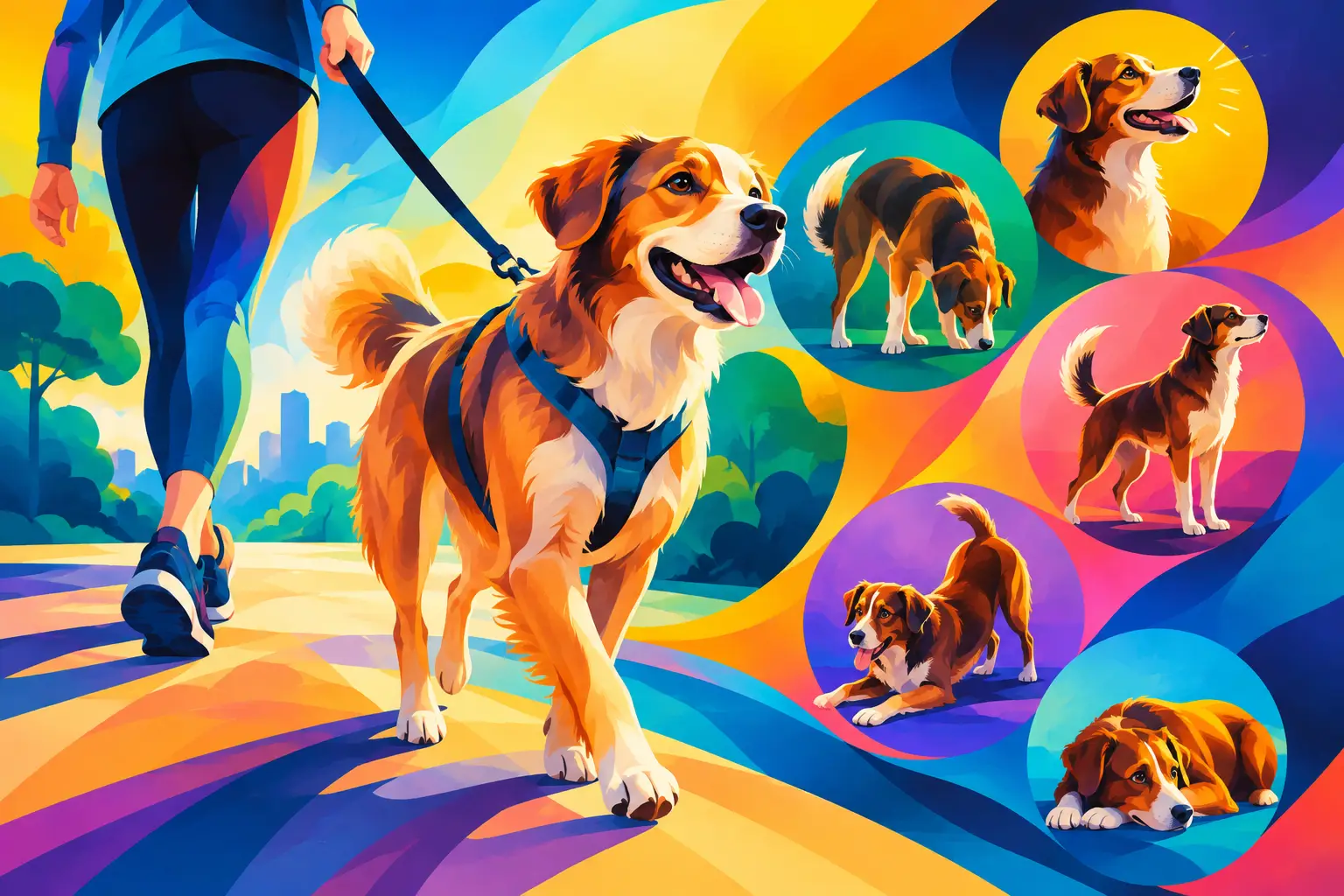
For example, a relaxed dog may have soft eyes, a loose body, an open mouth and easy, curved movement. Their tail may wag at a comfortable height. By contrast, a dog that is worried may hold their body still, turn their head away, lick their lips, tuck their tail or scan the environment. Some dogs become noisy when uncomfortable; others go quiet.
Breed, age and individual temperament also matter. A short-tailed dog cannot communicate with its tail in the same way as a dog with a long tail, and naturally upright ears can make a dog appear more alert than they feel. Learn your own dog’s normal posture first. Changes from that baseline are often the clearest message.
Signs your dog is relaxed and comfortable
A comfortable dog usually looks loose rather than rigid. Their weight is evenly balanced or shifts casually from side to side. They may sniff, blink normally, shake off, stretch or move in gentle curves rather than marching straight towards another dog.
During friendly play, dogs often take turns chasing and being chased. You may see a play bow, where the front legs lower while the hindquarters remain raised, followed by bouncy movement. Brief pauses are healthy. Both dogs should be able to move away and choose to return.
Even friendly play can become too much. If one dog repeatedly tries to leave, hides behind their owner, freezes, rolls over without re-engaging, or is constantly chased, it is time to calmly create a break. Good social skills are not about making every dog interact. They are about helping your dog remain settled around others.
Stress signals are often quiet
Dogs generally give subtle signals before they resort to barking, lunging, snapping or biting. Owners who spot those early signs have more options. They can increase distance, change direction, ask for a familiar behaviour, or simply give the dog time to settle.
Common signs of rising stress include a closed, tense mouth; repeated lip licking when no food is present; yawning outside of tiredness; turning the head away; showing the whites of the eyes; suddenly sniffing the ground; scratching; pacing; or moving behind the owner. A dog may also become unusually slow or very still.
None of these signs proves that a dog is afraid. A yawn might mean tiredness and a scratch might simply be an itch. Look for clusters of signals and the context. If your dog yawns, looks away and pulls towards home when a skateboard passes, that combination deserves attention.
When stillness is not calm
Many owners understandably focus on obvious behaviour such as barking or pulling. Yet a frozen dog can be more concerning than a noisy one. Stiff legs, a hard stare, a closed mouth and weight shifted forward can indicate that a dog feels pressured and is deciding what to do next.
Do not reach over, pat or pull a dog in this state towards the thing that worries them. Create space without drama. Cross the road, step off the footpath, turn away or place your body between your dog and the trigger if it is safe to do so. Then consider what training plan will help your dog cope more confidently next time.
Fear, discomfort and defensive behaviour
A fearful dog often tries to make a difficult situation go away. They may retreat, crouch, tuck their tail, flatten their ears or avoid eye contact. If they cannot leave, they may bark, growl, lunge or snap. These behaviours need careful management, not punishment or dismissal.
A growl is valuable communication. It tells you a dog is uncomfortable enough to ask for distance. If you only stop the growl without addressing the cause, you may lose an early warning sign while the dog remains worried.
Children need particular guidance around this. Teach them not to hug dogs, climb on them, disturb them while eating or sleeping, or approach a dog who is resting in a corner. Even a patient family dog needs space. Adult supervision is essential whenever young children and dogs are together.
If your dog has snapped, bitten, guards food or toys, reacts strongly on lead, or is difficult to manage around visitors, seek professional behaviour support promptly. Safety comes first. A qualified trainer can assess the patterns around the behaviour and give you practical handling steps for home and public situations.
What tails, ears and eyes can tell you
These body parts are useful, but they should never be read in isolation. A high, fast and tight tail wag can signal high arousal, which may be excitement, tension or both. A low or tucked tail often suggests uncertainty or fear. A broad, loose wag that involves the dog’s whole body is more likely to accompany relaxed engagement.
Ears forward can show interest, while ears pinned back can indicate concern, appeasement or discomfort. But some dogs naturally carry their ears differently, so compare the position with their usual expression.
Eyes can be especially revealing. Soft eyes, normal blinking and a relaxed face generally suggest comfort. A hard stare may signal tension. If you can see a crescent of white around the eye, often called whale eye, the dog may be feeling uneasy, especially if their body is also still or tense.
A dog body language guide for walks
The lead can make communication harder. A dog that would naturally move away from another dog may feel trapped at the end of a short, tight lead. They may then bark or lunge to create the space they could not take for themselves.
Watch your dog well before they reach their limit. Perhaps they stop taking treats, lock onto another dog, pull forward, lower their head or become tense through the shoulders. That is your cue to act early. Increase distance and reward calm attention when your dog can offer it. There is no prize for passing close to every dog on the footpath.
Avoid forced greetings. Many dogs are more comfortable walking past another dog than meeting face to face. A brief, loose interaction may be appropriate when both dogs are relaxed and owners agree, but it depends on the dogs, the environment and the available space.
Practise simple skills away from distractions first. A reliable response to their name, a turn-away cue and calm lead handling give you useful options when something unexpected appears. Consistent daily practice is what makes these skills available on a busy walk, not just in the backyard.
Use what you see to guide training
Reading body language should lead to a practical response. If your puppy becomes overexcited and mouthy in the evening, look for the signs that come before the biting: faster movement, jumping, grabbing clothes or difficulty settling. A planned rest, a calm activity and clear household rules can prevent rehearsal of the behaviour.
If your adult dog becomes tense near other dogs, do not wait for an explosion before changing direction. Work at a distance where your dog can still respond to you. Build confidence gradually, keep sessions short and repeat them consistently. Progress is rarely a straight line, particularly for dogs that have practised reactive behaviour for a long time.
For some families, group obedience provides the right structure to develop focus around distractions. For others, especially where aggression, severe reactivity or household safety is involved, private support is the better starting point. The right approach depends on your dog’s history, triggers and ability to cope.
Command Dog Training School has helped Melbourne owners build these skills since 1989 through structured training for puppies, adolescent dogs and adults. The aim is not to make a dog silent or still. It is to help owners recognise what their dog needs, give clear direction and create calmer, safer routines.
The next time your dog looks away, slows down or stiffens on a walk, treat it as useful information. A small adjustment made early can protect your dog’s confidence and make daily life together far more enjoyable.