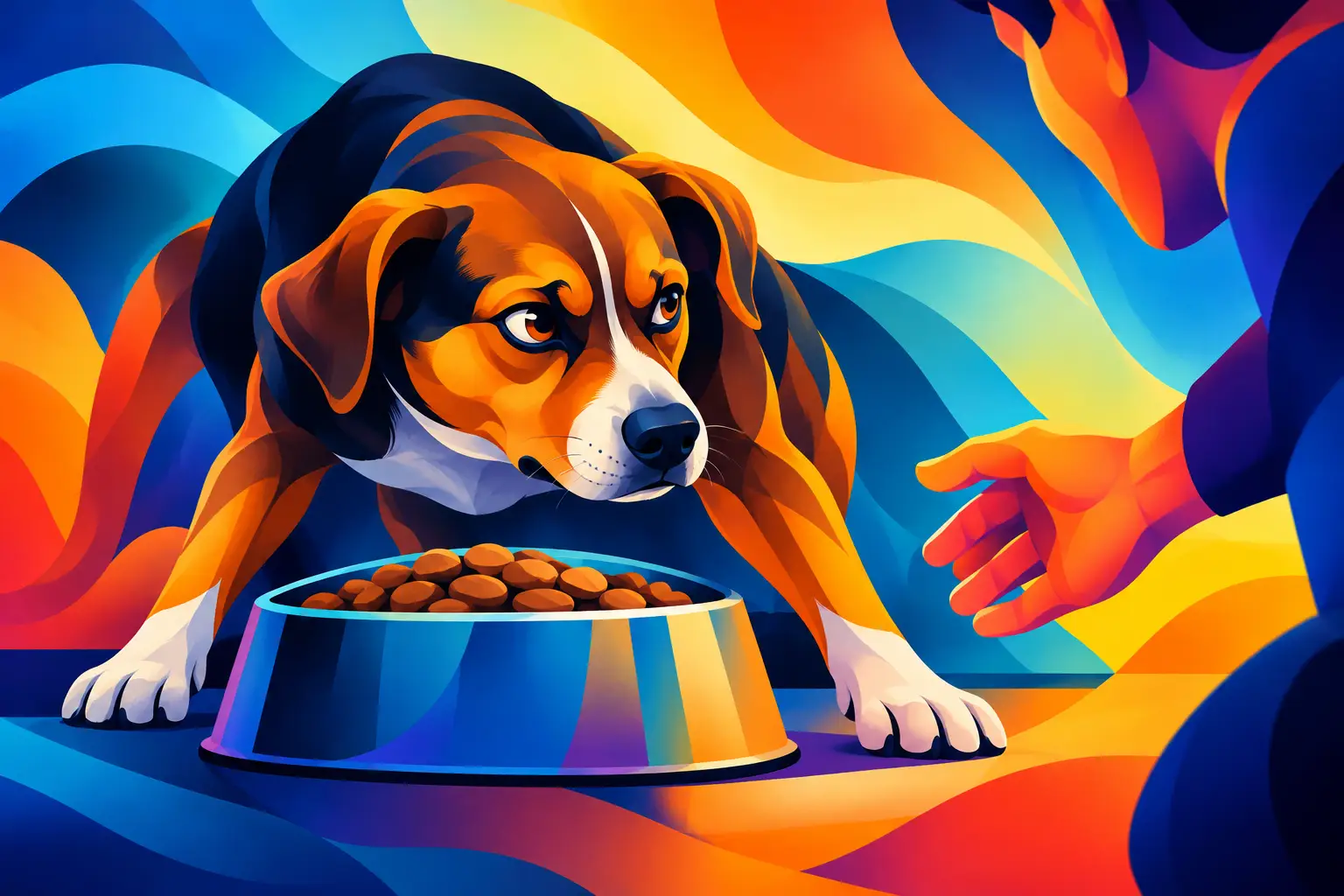
A dog freezing over the dinner bowl, eating faster when someone walks past, or growling when a hand reaches towards a chew can be unsettling. Understanding why dogs guard food is the first step towards handling it safely. Food guarding is not a dog being spiteful or trying to take charge of the household. It is a behaviour driven by concern that a valued resource may be taken away.
The behaviour can range from subtle body language to a serious bite risk. Addressing it early gives your dog a clearer routine and gives everyone in the home safer, calmer mealtimes.
What food guarding looks like
Food guarding, also called resource guarding, occurs when a dog attempts to keep possession of something valuable. That may be a meal, a bone, a treat, food dropped on the kitchen floor or even an empty bowl that still carries the scent of dinner.
The early signs are easy to miss. A dog may lower its head over the food, turn its body away, eat rapidly, become very still, show the whites of its eyes or glance sharply towards an approaching person. If the dog feels further pressure, it may stiffen, lift its lip, growl, snap or bite.
A growl is useful information. It tells you that the dog is uncomfortable and needs space. Punishing the growl may suppress that warning without changing the underlying concern, leaving a dog more likely to react with little notice next time. Treat the warning seriously, step back and change the situation rather than challenging the dog.
Why dogs guard food
Dogs guard food because food has value, and they have learned that people or other animals near it can predict loss, interruption or competition. Some dogs are naturally more concerned about resources than others, but their experiences and daily routines play a major role.
A puppy may learn to worry when children repeatedly reach into its bowl, when another dog crowds it at dinner, or when people regularly take chews away without offering anything in return. An adult dog that has had inconsistent access to food, competed with littermates, lived in multiple homes or been startled while eating may be more watchful around meals.
Guarding can also appear when a dog is hungry, overtired, unwell or under stress. A sudden change in behaviour deserves attention. Dental pain, digestive discomfort and other medical issues can make a normally tolerant dog less comfortable being approached, so a veterinary check is sensible if the behaviour is new or escalating.
It also depends on the item. A dog may happily allow you near kibble but guard a chicken carcass found on a walk, a marrow bone or food stolen from the bench. That does not mean the dog is being inconsistent. It means the value of the resource, and the dog’s expectation that it could be removed, has changed.
The mistakes that can make guarding worse
Many owners have been told to prove they can take food away. This can involve putting hands in the bowl, removing meals partway through, standing over the dog, or asking children to handle food while the dog eats. These approaches can create exactly the problem they are meant to prevent: a dog learns that people approaching dinner really do make food disappear.
Avoid physically confronting a guarding dog, grabbing its collar or trying to remove an item by force. Even a friendly family dog can bite when cornered over something it believes it must protect. Never leave children to manage this behaviour. Children move quickly, may not read warning signs and are often at face level with dogs.
Do not assume the issue will disappear because the dog has never bitten. Stiffness, avoidance and growling are signs to act on now. Equally, do not label the dog as bad or dangerous based on one growl. The goal is to reduce pressure, prevent rehearsals of the behaviour and teach safer responses over time.
Start with management at home
Management is not giving up on training. It is the practical safety plan that prevents difficult situations while new habits are being built.
Feed your dog in a quiet, low-traffic area where it can eat without people stepping over it. If there are children, use a baby gate, closed door or another reliable separation method during meals. Teach children a simple household rule: when the dog is eating, chewing or has found food, leave it alone and ask an adult for help.
In homes with more than one dog, feed separately. Picking up bowls once each dog has moved away can prevent one dog returning to check another’s leftovers. High-value chews should also be given in separate spaces, particularly if either dog watches, rushes or crowds the other.
Keep benches clear, secure rubbish bins and be alert on walks. If your dog finds something unsafe, chasing or cornering it can increase the chance of swallowing the item or provoking a defensive reaction. Calm preparation matters more than a showdown.
Building better associations around food
For mild food concern, the broad aim is to help the dog learn that a person approaching predicts something better, rather than loss. This needs to happen at a distance where the dog remains relaxed. If the dog freezes, speeds up, stares or growls, you are too close or moving too quickly.
Teach an approach means good things
Begin while your dog eats a lower-value meal in its usual safe spot. Walk past at a comfortable distance, gently toss a more appealing piece of food into or near the bowl, then continue walking away. There is no need to touch the bowl or the dog. Repetition changes the picture: a person passing by becomes a reason for extra food to arrive.
As your dog stays soft and relaxed over several sessions, you can gradually work a little closer. Progress should be slow and based on your dog’s body language, not a timetable. A dog that is worried needs more distance, not more pressure.
Practise an exchange away from conflict
A reliable exchange is useful for everyday life, from a dropped biscuit to a sock pinched from the laundry. Start with an item your dog does not guard, such as a low-value toy. Offer a better item or food reward, use a consistent cue such as “give”, and allow the dog to release the first item voluntarily.
Where safe and appropriate, return the original item after a brief pause. This teaches that letting go does not always mean losing everything. Do not use this exercise to repeatedly take prized chews from a dog that is already guarding them. That situation needs a more carefully tailored plan.
When professional help is needed
Seek qualified behaviour support promptly if your dog has snapped, made contact with teeth, guards from children or other pets, guards multiple items, or reacts before anyone is close. It is also wise to get help when you feel anxious around your dog’s food. Trying to work through a bite risk without experienced guidance can put family members and the dog in a worse position.
A trainer can assess the full picture: where guarding occurs, what triggers it, how intense it is, who is at risk and how the household can manage it consistently. The most useful plan is rarely a single trick. It combines safe routines, clear handling, gradual training and owner practice between sessions.
Command Dog Training School has worked with Melbourne owners for decades on practical household challenges, including behaviour concerns that make daily life stressful. For a dog with serious food guarding, individual support can help you put safety measures in place while building a plan that suits your dog and home.
A calmer routine is the real goal
Your dog does not need to welcome every person hovering around its dinner bowl. Like people, dogs deserve to eat without being bothered. The realistic goal is a dog that can enjoy food calmly, while owners can manage meals, move through the home and respond safely if something unexpected happens.
Start by giving your dog space, preventing avoidable conflict and listening to the early signs. With consistent handling and the right support where needed, many dogs learn that food no longer needs defending and home becomes a calmer place for everyone.